Starting a barbecue rib joint is less about having a great recipe and more about building a repeatable system—menu, prep schedule, licensing, food safety, and a launch plan you can execute. This guide walks you through the exact steps, the best websites to research requirements, and practical tips to start small, prove demand, and scale with confidence.
Key Takeaways
- “Rib joint” vs “BBQ rib restaurant” is mostly branding—rib joint usually signals a casual, ribs-focused specialty spot.
- Start by picking the lowest-risk format (often pop-ups/catering), then scale into a permanent location once demand is proven.
- Use authoritative sources first: SBA for business setup, FDA for food business overview, and your local health department for licensing and plan review.
- BBQ success is operations: production timing, consistency, portion control, and food safety systems.
- Confirm ventilation/fire requirements early—BBQ equipment decisions can trigger major buildout costs.
Starting a barbecue rib joint business sounds simple on paper: make great ribs, open the doors, and let the smell do the marketing. But the truth is, ribs are one of the most operationally demanding foods you can sell. The cooking takes time, the timing has to be consistent, and the health and fire-safety requirements can be more complex than people expect. The good news is that none of this is mysterious once you break it down into steps.
In this guide, you’ll find the best websites to research permits, licensing, and planning—plus a clear, beginner-friendly roadmap to go from “I want to start a rib joint” to a real business you can run profitably.
Table of Contents
What is a Barbeque Rib Business?
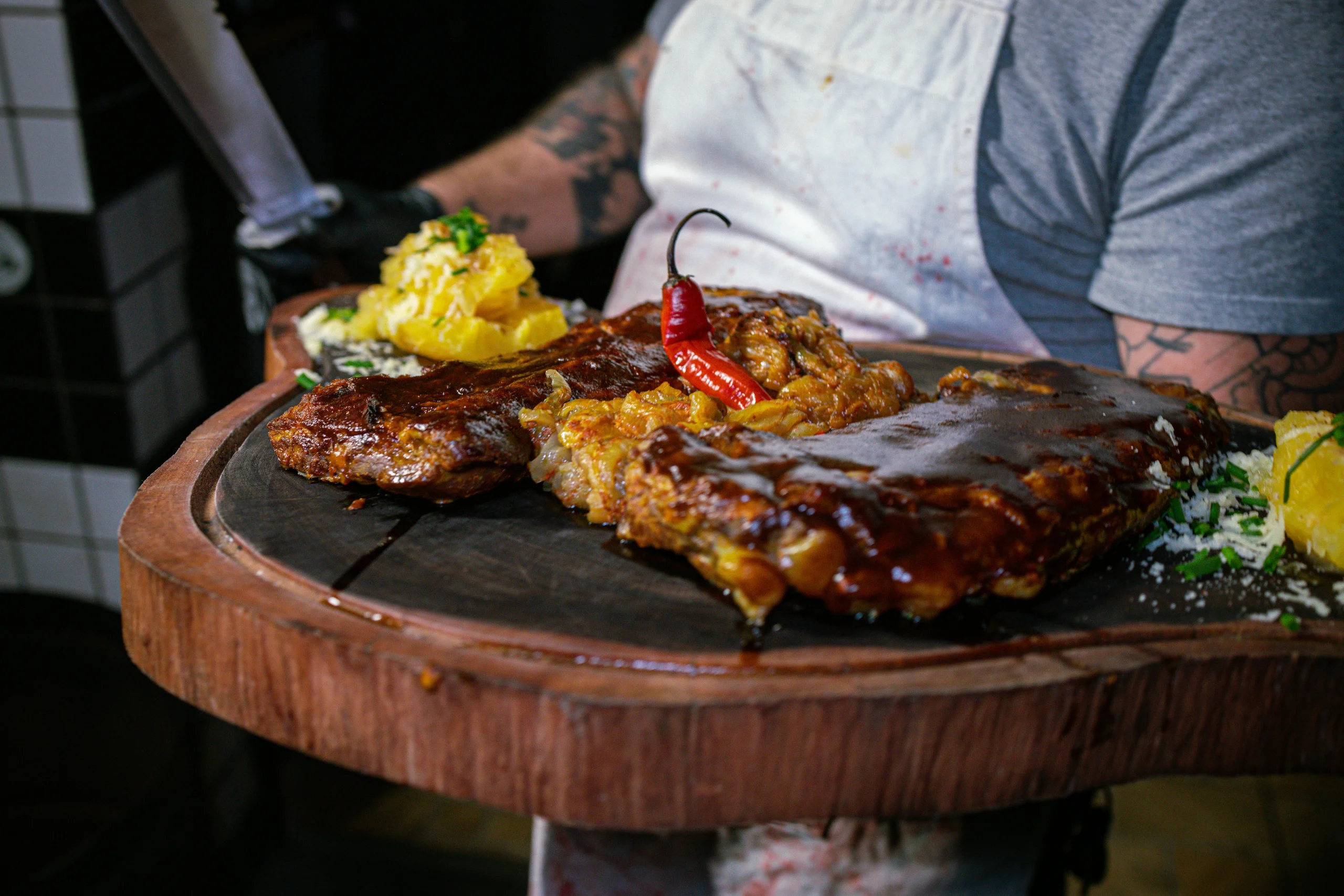
A barbecue rib business can be a brick-and-mortar restaurant, a counter-service “rib joint,” a food truck, a pop-up/catering operation, or a hybrid that starts small and grows into a full location. The smartest path is usually: prove demand → tighten operations → scale up.
First—what’s the difference: “barbecue rib joint” vs “barbecue rib restaurant”?
In everyday use, they’re basically the same thing. But the vibe is different:
- Rib joint usually implies: casual, focused menu (ribs + a few sides), big flavor, fast service, local identity. Think “specialty spot.”
- Rib restaurant / BBQ restaurant can imply: broader menu (brisket, pulled pork, chicken, sausage, sides, desserts), full-service dining, and sometimes higher build-out costs.
If your concept is ribs-forward and simple, “rib joint” is a great positioning phrase. If you’ll serve a broader BBQ menu, “BBQ restaurant” may match expectations better.
The best websites to learn how to start a rib joint (use these first)
You can find advice everywhere—but these sources keep you grounded in what actually matters: permits, food safety, planning, and compliance.
1. U.S. Small Business Administration (SBA) – business planning and launch steps
Use this for your startup checklist: business plan, costs, registration, funding, location.
2. FDA – “How to Start a Food Business” (regulatory overview)
This is a reality check on federal, state, and local requirements and how they overlap.
3. Your local Health Department / State food licensing pages
Restaurants are typically licensed/inspected at the local level, and they often require plan review before opening. (Michigan example: food service establishments are licensed by local health departments.)
4. ServSafe / National Restaurant Association training (food manager certification)
Many jurisdictions require at least one certified food protection manager (your inspector will care a lot about this). ServSafe is a common route.
5. NFPA 96 (fire safety + ventilation) & your local Fire Marshal guidance
If you’re cooking with smokers, grills, fryers, or anything producing grease-laden vapors, ventilation and suppression requirements matter. NFPA 96 is the key standard you’ll keep hearing about.
6. Practical operator guides (for equipment + workflow ideas)
These are not “law,” but helpful for operational thinking and equipment planning (cross-check with your inspector and fire marshal):
- BBQ startup walkthroughs (equipment/menu thinking)
- Hood/ventilation explainers (still: verify locally)
How to start a barbecue rib joint: concrete steps you can follow
Step 1: Choose your “starting format” (this decides your cost and risk)
Before you perfect your rub, you need to decide what kind of rib business you’re actually building—because your format determines almost everything else: startup costs, permits, staffing needs, how far you can scale, and how fast you can get into the market.
A lot of first-time owners make the mistake of jumping straight into a lease because it feels “real,” but BBQ is one of those businesses where the equipment and compliance costs can surprise you. Choosing the right starting format helps you test demand without risking your savings, and it gives you a clean path to grow (for example: pop-ups → catering → small counter-service location). Think of this step as your risk-management decision: you’re picking the vehicle that gets you to paying customers with the least friction.
Before recipes, decide the vehicle for the business:
| Format | Best for | Pros | Watch-outs |
|---|---|---|---|
| Pop-ups / catering | testing demand | low overhead, fast learning | scheduling + consistency |
| Food truck / trailer | mobility + events | strong sales peaks | commissary rules, logistics |
| Counter-service rib joint | “ribs are the hero” | simpler staffing + menu | still needs full compliance |
| Full-service BBQ restaurant | bigger ticket sizes | experience + alcohol potential | highest build-out + labor |
Tip: If you’re new, start with pop-ups/catering for 60–90 days, then choose a permanent format based on what sells and what’s operationally realistic.
Action Tip: Circle the lowest-risk format you can launch in the next 30–45 days (pop-up, catering, or mobile). If you can’t realistically start it within that window, the format is probably too expensive or too complex for “Version 1.”
Step 2: Build your concept around one “signature promise”
Barbecue is crowded in almost every market, which means “we have ribs” isn’t a positioning strategy—it’s the minimum requirement to compete. What makes a rib joint memorable is a clear promise customers can repeat to someone else without thinking. That promise becomes your north star for everything: your menu size, your prep system, your portioning, your pricing, your hours, and even your location.
When your concept is too broad, you end up with a confused menu and a kitchen that’s always behind. When your concept is focused, you build a reputation faster, your training is easier, and your food costs stay under control.
Examples of rib-joint promises:
- “The tender rib spot” (fall-off-the-bone consistency)
- “The bark-and-smoke spot” (competition-style bite + smoke profile)
- “The fast lunch rib spot” (speed + lunch combos)
- “The family platter spot” (value bundles + sides)
Now translate that into a tight concept:
- Your ideal customer (families? lunch crowd? late-night?)
- Your service speed goal (8 minutes? 12? 18?)
- Your average ticket ($15? $22? $30+ platters?)
Tip: A rib joint wins by being known for one thing, not by doing everything.
Action Tip: Write a one-sentence “promise” you’d want a customer to say to a friend, like: “This is the place for ___.” If you can’t fill that blank clearly, your concept is still too broad.
Step 3: Create a “ribs-first” menu that’s profitable and operationally sane
Your menu is not just a list of items—it’s your operating system. The more items you add, the more ingredients you carry, the harder your training becomes, and the more likely you are to waste product (which quietly destroys profit in BBQ).
A beginner-friendly rib joint menu should make it easy to execute ribs consistently, keep ticket times reasonable, and still give customers enough choice to feel satisfied. The goal at the beginning isn’t to impress people with variety; it’s to earn repeat customers with consistency, speed, and portions that match the price.
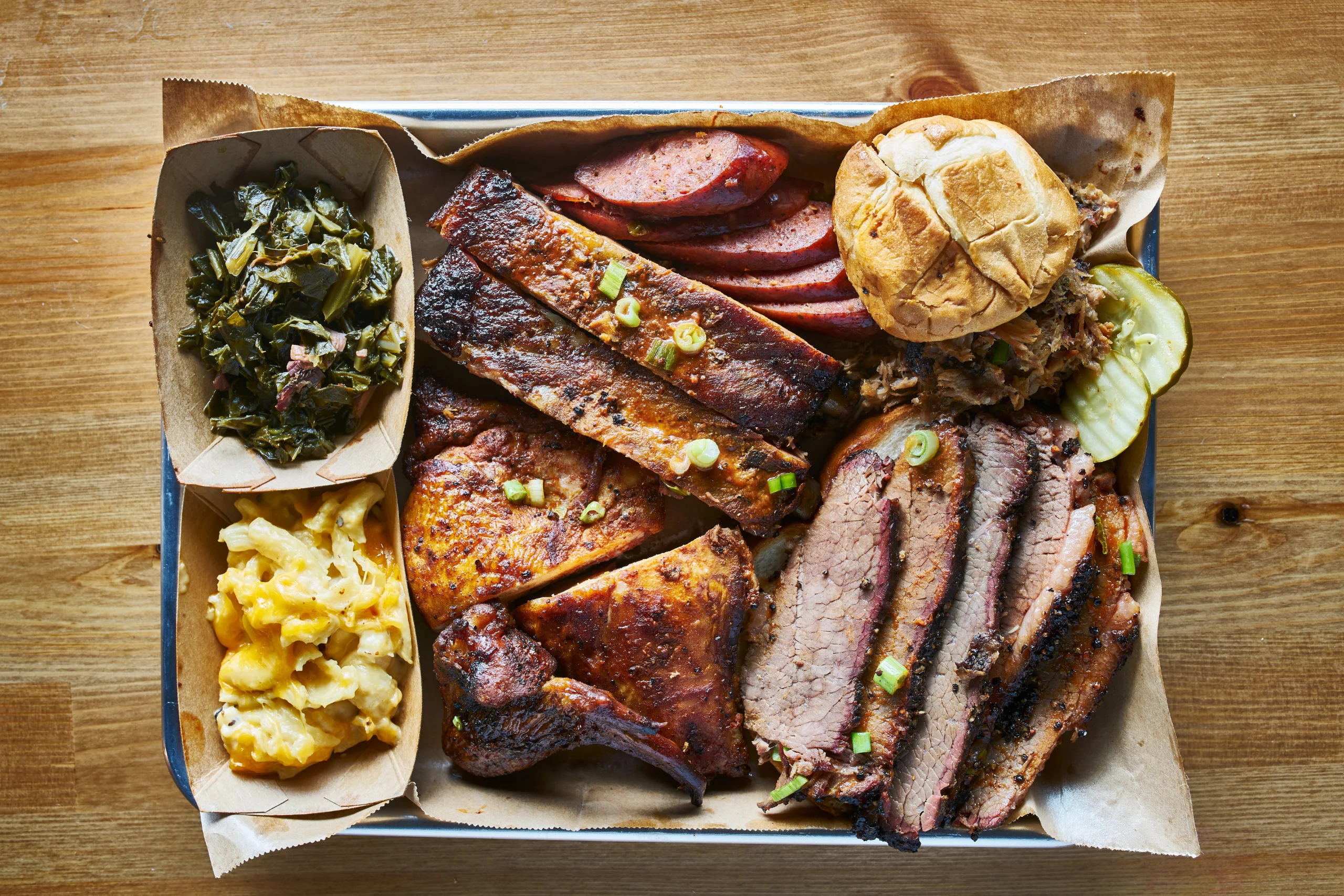
A strong starter menu:
- Ribs: 2 styles max (e.g., dry rub + sauced)
- Protein add-ons: 1–2 (pulled pork, smoked chicken)
- Sides: 4–6
- Dessert: 1–2
- Drinks: simple
Menu rule that saves you money:
Every ingredient should appear in at least two items.
This cuts waste, simplifies ordering, and makes training easier.
Action Tip: Draft your starter menu on one page and highlight every ingredient. If any ingredient is only used once, either remove it or build a second use for it (special, side, sauce, topping) so it doesn’t become waste.
Step 4: Turn recipes into a production system (BBQ is a logistics business)
BBQ is different from many restaurant concepts because it runs on long cook times, tight timing, and limited flexibility once service starts. You can’t just “fire more ribs” when you’re slammed like a burger spot can. That means your profitability lives and dies by planning: your smoke schedule, your holding method, your portioning, and your ability to serve customers without chaos. A great rib joint doesn’t rely on hero moments—it relies on a repeatable routine that produces consistent ribs at predictable times.
Build a simple “production clock”:
- What time meat is trimmed
- What time it hits the smoker
- What time it rests/holds
- What time it’s portioned and served
- What your “sold out” time should be
Tip: You want a predictable pattern like:
Prep day → smoke overnight → serve next day → repeat.
Your first win is consistency, not maximum variety.
Action Tip: Create a simple smoke schedule on paper for one full service day (trim → smoke → rest → hold → serve). Then do a “walkthrough” and ask: Where do I run out of time, space, or refrigeration? Fix that before opening.
Step 5: Validate demand before you sign a lease
A lease is one of the hardest commitments to undo in food service, and it’s where a lot of new restaurants get trapped: high overhead, fixed bills, and not enough cash flow while they’re still learning. Validating demand first gives you proof that people will buy your ribs at the price you need—and it teaches you what sells, what takes too long, and what customers actually ask for.
Even a small test phase can save you from expensive mistakes like overbuilding your kitchen, buying the wrong equipment, or choosing a location that doesn’t fit your traffic pattern.
Easy validation plan
- Pick a name and a simple brand (logo optional)
- Run 3 pop-ups in 3 different contexts:
- weekday lunch near offices
- weekend family area
- event/craft market
- Track:
- best sellers
- average ticket
- sell-out time
- repeat buyers
- which sides actually move
Tip: Demand validation is also your first marketing content: photos, customer quotes, wait-in-line shots, “sold out” posts.
Action Tip: Run three pop-ups before signing a lease and treat them like experiments. Use a notes app to record: best seller, sell-out time, average ticket, and top 3 questions customers ask (those questions become marketing copy).
Step 6: Get legal + licensing right (don’t wing this)
This step isn’t exciting, but it protects your business—and it prevents the kind of delays that can drain your budget before you even open. Food businesses are regulated at multiple levels (city/county/state), and many areas require plan review, inspections, and specific operational standards before you can serve the public. BBQ can add extra layers because you may be dealing with smoke, grease, higher-heat cooking equipment, and food holding. The simplest approach is to treat your local health department as a partner early: ask what they require, build to their expectations, and you’ll avoid expensive rework later.
Food businesses aren’t “file a form and go.” want to review your plan before you open.
Here’s the common sequence:
- Business formation (LLC, etc.), EIN, bank account (SBA helps with this checklist)
- Location + zoning (or commissary agreement for mobile/pop-ups)
- Health department plan review (menu, equipment list, layout, SOPs)
- Food service license + pre-opening inspection (local)
- Food manager certification (often required)
- Fire safety / ventilation approvals for cooking equipment
- Insurance, payroll setup, signage permits (varies)
Practical tip:
Call your local health department early and say:
“I’m planning a BBQ rib concept. What do you need for plan review—menu, equipment specs, SOPs, layout?”
They’ll tell you exactly what your inspector expects.
Action Tip: Call your local health department and ask for the plan review checklist. Then create a folder (digital or paper) labeled “Licensing” and save everything there—menu draft, equipment list, SOPs, and communications—so you’re not scrambling later.
Step 7: Don’t underestimate ventilation + fire safety (BBQ can get expensive fast)
If you hear experienced restaurant owners warn you about “buildout surprises,” this is usually what they mean. Ventilation, hoods, fire suppression, and grease management can turn a “simple rib place” into a high-cost project—especially if you choose equipment before you confirm what the building and local codes require.
BBQ concepts often generate smoke and grease-laden vapors that trigger stricter requirements than other food businesses, and those requirements can affect your location choice. The smart move is to confirm compliance first, then pick equipment that fits the space and rules.
Tip: Before buying a smoker for an indoor install, confirm the requirements with your AHJ (Authority Having Jurisdiction—usually fire marshal/building dept). It can save you thousands.
Action Tip: Before you buy a smoker or commit to a space, schedule a quick conversation with the fire marshal/building department (or your landlord’s buildout rep) and ask: “What ventilation/suppression requirements apply to this cooking setup?” Get the answer in writing if possible.
Step 8: Build your startup budget using categories (not guesses)
When people ask “How much does it cost to start a rib joint?” they’re usually looking for a single number—but the real answer depends on your choices: format, location, buildout level, staffing, and equipment.
The best way to budget is to list the categories that actually cost money, then price them out using real quotes and local averages. This forces clarity and protects you from the classic mistake of “opening with no runway.” BBQ businesses are especially vulnerable here because equipment and compliance costs can pile up quickly.
Core categories to price out
- Lease + buildout (or commissary costs)
- Smoker(s) + refrigeration + hot holding
- Vent hood / suppression (if applicable)
- Smallwares (knives, pans, cambros, thermometers)
- POS system + online ordering
- Initial inventory + packaging
- Permits/licensing/inspection fees
- Insurance
- Marketing + signage
- Payroll buffer (very important)
Tip: Your first budget should include a 90-day survival plan—because the first months are when you’re dialing in speed, staffing, and food costs.
Action Tip: Build your budget in a simple spreadsheet with three columns: Low / Expected / High. If you can’t fund the “High” scenario with some buffer, scale the concept down (smaller menu, smaller space, pop-up first).
Step 9: Price ribs the smart way (so you don’t work hard for nothing)
Pricing BBQ wrong is one of the fastest ways to end up exhausted and underpaid. Ribs are not like simple fast-food proteins—there’s trimming, shrink during cooking, long cook time, resting/holding, and labor baked into every plate. If you only price based on raw meat cost, you’ll almost always undercharge. The goal is to price in a way that covers your true costs while still feeling fair to customers—and that usually means smart combo design, upsells that don’t complicate execution, and portion control you can train consistently.
BBQ pricing isn’t just food cost. It’s:
- shrink (fat loss, moisture loss)
- trimming waste
- long cook times
- labor
- holding losses
A simple rule that keeps you safe early:
- Price combos so that sides and drinks carry margin
- Offer bundles (2–3 ribs combos + family packs)
- Keep a limited-time special that uses the same ingredients (controls costs)
Action Tip: Create three rib offerings that “anchor” your pricing: single plate, combo, and family pack. Make sure your combos include items with strong margins (sides + drinks) so ribs aren’t carrying the whole business.
Step 10: Create a repeatable launch plan (not just a grand opening)
A rib joint doesn’t win because of one busy opening weekend—it wins because customers come back and bring friends. That only happens when your food is consistent and your hours are reliable. A structured launch keeps you from doing too much too soon, lets your team learn under controlled conditions, and gives you time to refine ticket times, portioning, and inventory ordering. Think “soft open with intention,” not “go viral and hope the kitchen survives.”
A clean 4-week launch plan
- Week 1: Soft open (limited hours, limited menu)
- Week 2: Add 1–2 sides + refine speed
- Week 3: Add online ordering + bundles
- Week 4: Event/partner day (brewery collab, fundraiser, local influencer tasting)
Tip: Stay consistent on hours. BBQ places lose trust when customers can’t predict availability.
Action Tip: Plan a soft opening with intentionally limited hours and a simplified menu. Then set one measurable goal per week (example: “Ticket time under 12 minutes” or “Less than 3% waste”), and don’t expand until you hit it.
FAQ on Starting a Barbecue Rib Joint Business
How much does it cost to start a barbecue rib restaurant?
Costs vary wildly based on format. A pop-up/catering setup can be relatively low compared to a full buildout, while a brick-and-mortar BBQ restaurant can be one of the more expensive food concepts because of equipment, refrigeration, holding capacity, and sometimes ventilation/suppression requirements. The practical way to answer this is to build your budget by categories (equipment, buildout, permits, insurance, inventory, payroll buffer) and price out each line item before committing to a lease. The SBA’s planning guides are a solid starting point for structuring startup cost thinking and launch steps.
What permits do I need to open a rib joint?
Most rib joints need: business registration, local food service licensing/inspection through the health department, and often plan review prior to opening. Requirements differ by city/county and the format (restaurant vs mobile vs catering). Many local health departments require your menu, equipment list, SOPs, and layout as part of plan review—so you’ll want to contact them early.
Do I need a food manager certification to run a BBQ restaurant?
In many jurisdictions, at least one person in charge must hold a certified food protection manager credential (often via an ANSI/CFP accredited exam). ServSafe is a common option, and certification requirements can be set by state/local authorities, so verify locally.
Is it better to start with a food truck or a small rib joint location?
If your goal is lower risk and faster learning, mobile or pop-ups can be a great proving ground. A small counter-service rib joint can also work if you’re confident in the area and can keep the menu tight. The real difference comes down to: upfront cost, operational complexity, local licensing rules, and whether your product sells best at events vs a consistent neighborhood location.
How do BBQ restaurants keep smoked meat safe if it cooks for so long?
Long cooks don’t automatically equal “safe”—food safety is about controlling time and temperature, avoiding cross-contamination, and using approved holding and cooling methods. That’s why inspectors care about trained management, documented procedures, and proper equipment (hot holding, refrigeration, thermometers). Food safety training programs like ServSafe exist specifically to teach these operational controls.
What’s the biggest mistake new BBQ owners make?
Usually one of these: an oversized menu, underpricing, inconsistent production timing, or ignoring compliance/buildout realities (especially ventilation/fire safety). BBQ is a systems business—your “secret sauce” won’t save you if your prep, smoke schedule, and service line aren’t repeatable.